History is well documented about the life of Jesus, but still so many do not believe!

“These three great facts–the resurrection appearances, the empty tomb, and the origin of the Christian faith–all point unavoidably to one conclusion: The resurrection of Jesus. Today the rational man can hardly be blamed if he believes that on that first Easter morning a divine miracle occurred.”
~Nicholas Thomas Wright (New Testament and Pauline Scholar)
History is well documented about the life of Jesus, but still so many do not believe! There is so much historical evidence for the life of Jesus! You can look in the history books and find out a lot about many things. The life of Jesus is written by many, not just one person, it is well documented, it was foretold in the Old Testament in Isaiah, and happened in the New Testament, His birth, life, ministry, death, and then His resurrections. Their is no denying Jesus, Mary, and Joseph, and all the disciples and the story and life of Jesus, we can read about it all in the Bible. Yet, so many do not believe that Jesus is the Savior of the Universe. Today when I was reading a book of prayers for each day, Day by Day, by Billy Graham, he spoke about how the life of Jesus is better documented in history than that of Alexander the Great, and many ancient civilizations, and people of the past who are well known too, like Jesus. Why do so many people diss Jesus? Why don't they believe when we all know the story and what happens, that hope of resurrection that Jesus was raised from the dead. The Romans and Jews(along with the Pharisees, scribes, and priests) had Jesus killed, yet He was an innocent man, He was Emmanuel, God with us, sent to us from God as foretold in Isaiah, yet people do not want to believe in Jesus. They do not want to follow, reflect, or imitate Him. They sin and sin, living evil, selfish, greedy, wicked lives for things of this world, when they can have life eternal when they follow Jesus!


Lucian of Samosata (ca. AD 166)
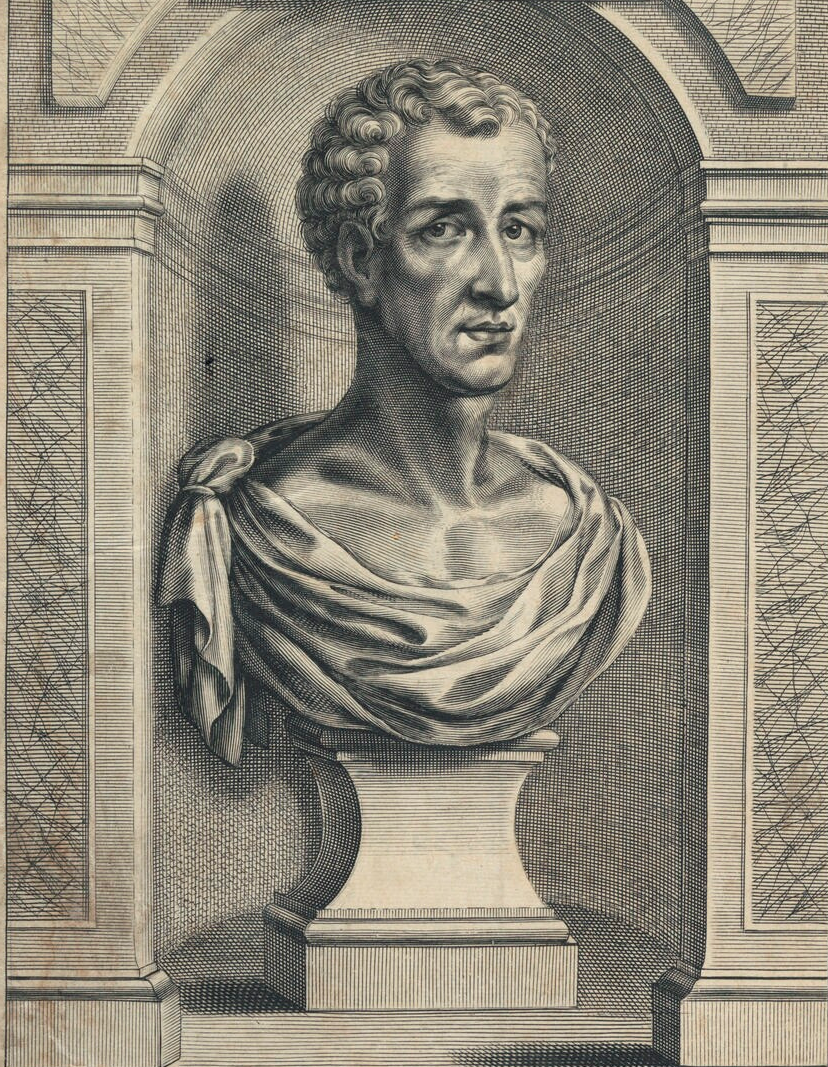
Lucian of Samosata was a famous Greek satirist who also referred to Jesus in his work, The Death of Peregrine, which was written sometime after AD 165. In it he mocks Christians, writing:
“The Christians, you know, worship a man to this day,–the distinguished personage who introduced their novel rites, and was crucified on that account…. You see, these misguided creatures start with the general conviction that they are immortal for all time, which explains the contempt of death and voluntary self-devotion which are so common among them; and then it was impressed on them by their original lawgiver that they are all brothers, from the moment that they are converted, and deny the gods of Greece, and worship the crucified sage, and live after his laws.”18
In this statement from the middle of the second century, we see Lucian acknowledge the following historical facts: 1) Jesus was the founder of a religion who was crucified; 2) His followers were converted and considered themselves spiritual brothers and sisters. 3) Jesus’s followers worshiped him as God.
Mara Bar Serapion (ca. AD 73)
Mara Bar Sarapion’s city was destroyed by the Romans who were occupying the land, and he himself was taken captive. From prison, he wrote a letter in Syriac to his son, also called Serapion, encouraging him to pursue wisdom. In it, Mara Bar Serapion refers to Jesus:
What else can we say, when the wise are forcibly dragged off by tyrants, their wisdom is captured by insults, and their minds are oppressed and without defense? What advantage did the Athenians gain by murdering Socrates, for which they were repaid with famine and pestilence? Or the people of Samos by the burning of Pythagoras, because their country was completely covered in sand in just one hour? Or the Jews by killing their wise king, because their kingdom was taken away at that very time? God justly repaid the wisdom of these three men: the Athenians died of famine; the Samians were completely overwhelmed by the sea; and the Jews, desolate and driven from their own kingdom, are scattered through every nation. Socrates is not dead, because of Plato; neither is Pythagoras, because of the statue of Juno; nor is the wise king, because of the new laws he laid down.19
While Jesus is not explicitly named, it is almost certain that Mara Bar Serapion is referring to Jesus as the “wise king” whom the Jews killed. Remember that the title “King of the Jews” was one used by Pilate (Lk 23:3), Roman soldiers (Mt 27:27-29), and even some Jews themselves (Mk 15:12). Moreover, the written charge that was placed above Jesus when he was crucified, which was seen by all, read “Jesus of Nazareth, the King of the Jews” (Jn 19:19). It would appear that this was a commonly known title by which Jesus was known in the first century.
J. Warner Wallace summarizes the significance of this reference: “From this account, we can add to our understanding of Jesus: He was a wise and influential man who died for His beliefs. The Jewish leadership was somehow responsible for Jesus’ death. Jesus’ followers adopted His beliefs and lived their lives accordingly.”20


Comments
Post a Comment
The Truth-God is Truth and Love